

Interlocutory Appeals and Governmental Immunity in Utah
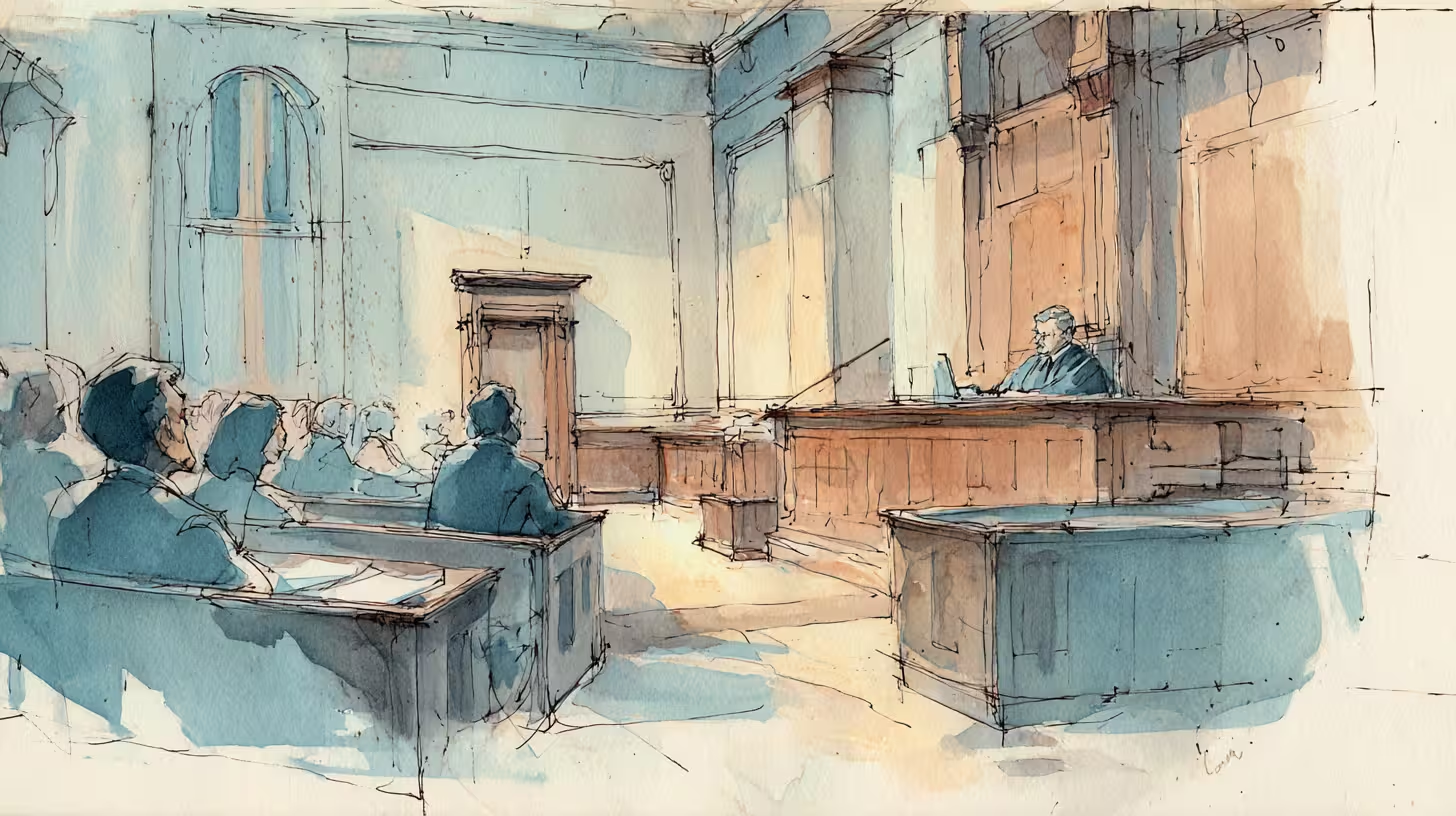
Governmental immunity is not just a defense to liability. It is a protection from the burden of suit — from discovery costs, from depositions, from the years of litigation that precede any judgment. That distinction is not semantic. It is the reason immunity denials occupy a special place in Utah interlocutory appellate practice.
When a governmental entity moves to dismiss a lawsuit on immunity grounds and the district court denies that motion, the entity cannot wait for final judgment to appeal. If it does, it has already litigated — and litigation is precisely what immunity was meant to prevent. The protection is gone before the appellate court can restore it. Interlocutory review under URAP Rule 5 is not one option among several in this context. It is frequently the only option that preserves the protection the law created.
The Governmental Immunity Act of Utah
The Governmental Immunity Act, codified at Utah Code sections 63G-7-101 through 63G-7-904, establishes the governing framework. The baseline is immunity. Section 63G-7-201 provides that governmental entities are immune from suit unless the Act or another statute expressly waives immunity. The Act then creates specific waivers for defined categories of conduct: negligent operation of vehicles, dangerous conditions on public property, negligent acts or omissions of employees acting within the scope of their employment, and others. Each waiver has its own scope and its own limitations.
When a plaintiff sues a governmental entity, the entity typically moves to dismiss on the ground that the Act does not waive immunity for the claim alleged. That motion presents a legal question: does the waiver language reach the conduct at issue? It is the district court’s ruling on that question — specifically, a denial of the motion to dismiss — that creates the interlocutory appeal issue.
Why Immunity Denials Satisfy the Rule 5 Standard
A petition for interlocutory review under URAP Rule 5 will be granted if it appears that the order (1) involves substantial rights and may materially affect the final decision, or (2) that determination of the correctness of the order before final judgment will better serve the administration and interests of justice. These are two alternative pathways to relief — not a conjunctive requirement. Immunity denials satisfy both naturally, which is why they are the most reliably successful category of interlocutory petition in Utah civil litigation.
Pathway One: Substantial Rights and Material Effect on the Final Decision
The immunity question — does this waiver provision apply to this conduct — is almost always a pure question of statutory interpretation. Statutory waiver language does not map cleanly onto every fact pattern, courts disagree about scope, and the answer directly determines whether the case proceeds at all. A ruling that should have ended the case sits squarely within this pathway: reversal terminates the litigation, which is the strongest possible showing under Rule 5.
Pathway Two: Better Serving the Administration and Interests of Justice
The second pathway captures a different but equally compelling argument: every day of continued litigation is a forfeiture of the protection the Act was designed to provide. Governmental immunity protects entities from the burden of defending a lawsuit, not merely from adverse judgments. If the entity is ultimately found to be immune, it will have spent years and substantial resources in proceedings that should never have occurred. Post-final-judgment review cannot restore those resources. The harm is not prospective — it is ongoing and accumulating from the moment the motion to dismiss is denied.
A petition addressing both pathways with specificity is stronger than one addressing only one. In immunity cases, the argument for both is usually available and should be made.
Scope of Employment Disputes
Many governmental immunity cases turn on whether the employee’s conduct fell within the scope of their employment. The Act generally waives immunity for negligent acts of employees acting within scope — but not for intentional torts or acts outside scope. Courts look at whether the conduct was of the kind the employee was hired to perform, whether it occurred within authorized work hours and space, and whether it was motivated at least in part by the employer’s interests.
These scope-of-employment questions generate substantial litigation and genuine legal disagreement. When a district court denies a motion to dismiss because it finds conduct within scope — or treats scope as a genuine factual dispute requiring trial — the governmental entity may have a viable Rule 5 petition if the legal standard for scope determination is genuinely contested. The petition should focus on the legal standard for scope analysis, not on the underlying factual dispute.
Extraordinary Writs as an Alternative
Governmental immunity cases can also proceed via extraordinary writ under URAP Rule 65B. The argument for a writ is that a court proceeding against an immune governmental entity is exceeding its jurisdiction — that immunity strips the court of authority to proceed. Utah courts have accepted that argument in some circumstances.
But the Rule 5 petition is more commonly the right vehicle. The legal question — does the statutory waiver apply? — fits Rule 5’s framework naturally and squarely. The extraordinary writ standard is more demanding: the petitioner must show a clear legal right and no adequate remedy at law. Experienced appellate counsel will evaluate both options before the 21-day window closes.
Notice Requirements and Pretrial Dismissals
Governmental immunity cases carry additional procedural requirements that must be satisfied before a lawsuit is even filed. Under Utah Code section 63G-7-401, a claimant must file a notice of claim with the governmental entity within one year of the claim arising, and the notice must include specific information. Failure to satisfy the notice requirement bars the lawsuit.
When a governmental entity argues that the notice requirement was not met and the district court denies that motion, the denial is also a candidate for interlocutory review. The legal question — whether the notice was legally sufficient — is a threshold question of law that fits comfortably within the Rule 5 framework.
Building the Interlocutory Record
The evaluation of whether to petition should begin the moment an immunity motion is denied — not the week after. The 21-day deadline is jurisdictional. There is no mechanism to extend it. The analysis requires familiarity with both the Act’s waiver provisions and appellate practice skills that differ meaningfully from trial litigation competencies.
The key questions: How solid is the immunity argument on the legal question? What does the district court’s ruling rest on — statutory interpretation, factual findings, or both? Is there appellate precedent that supports the entity’s position? What is the estimated cost of proceeding through trial compared to the cost of the petition and the value of preserving the immunity protection?
When the answers point toward a viable petition, the 21-day window needs to be used deliberately and well. The entire petition — including exhibits — must fit within 20 pages. A simultaneously filed motion to stay under URAP Rule 17 should be part of the evaluation from the outset; without a stay, district court proceedings continue while the petition is pending.
The 21-day window doesn’t wait for you to decide. If you have an adverse ruling you’re evaluating, Lotus Appellate Law can assess it quickly and tell you directly whether a Rule 5 petition is worth pursuing.