
How a Utah medical malpractice appeal turns on pre-suit and expert rulings
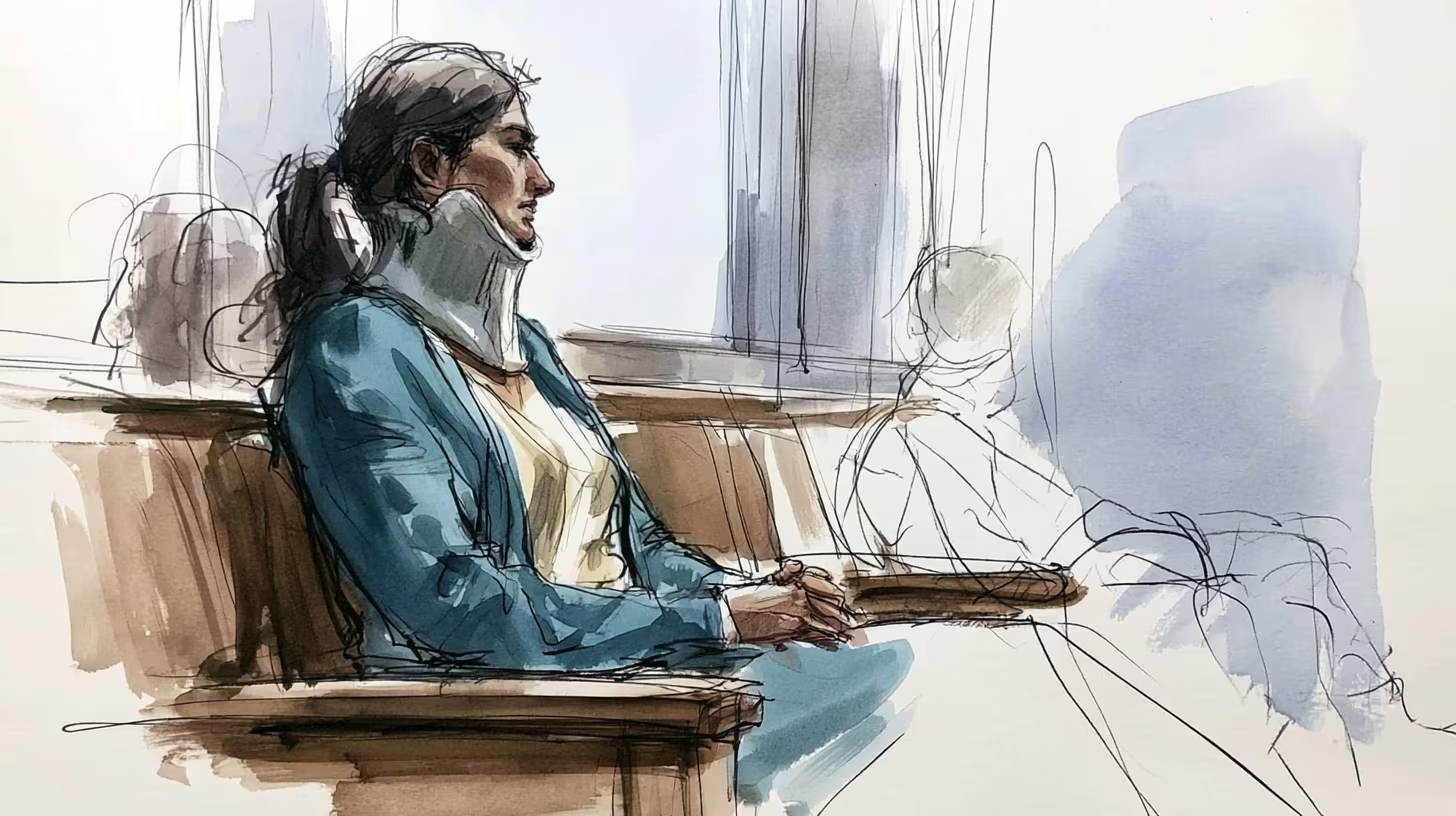
Two rulings can end a Utah medical malpractice case before a jury hears it. Either the court rules that the plaintiff did not satisfy the Health Care Malpractice Act’s pre-suit conditions, or it grants summary judgment because the expert testimony on the standard of care or causation was missing, excluded, or insufficient. Either way, no jury hears the case, and the next stop is a Utah medical malpractice appeal. Whether that appeal has traction depends on two things trial counsel controls more than it may seem: the standard of review the ruling invites, and what the record shows was argued below.
Two early exits that shape a Utah medical malpractice appeal
The two exits look similar from the trial court’s bench. On appeal they are reviewed very differently.
Pre-suit rulings are mostly legal questions. Whether a plaintiff gave proper notice, timely requested panel review, or needed a certificate before filing usually turns on statutory text, and sometimes on the constitution.
Expert rulings are layered. A summary judgment for lack of expert proof often rests on an earlier decision to exclude or disregard an expert. The summary judgment gets fresh review, but the exclusion gets deference. An appeal that attacks the wrong layer, or attacks the right layer with an argument never made below, rarely succeeds.
This post stays specific to medical malpractice. Lotus Appellate Law has separate posts on the role of expert witnesses in Utah summary judgment practice and on appealing summary judgment rulings generally, and those cover the broader ground.
Pre-suit requirements and how a Utah Health Care Malpractice Act appeal is reviewed
The Act stacks several conditions in front of the courthouse door.
Notice of intent. Under Utah Code § 78B-3-412, a malpractice action “may not be initiated unless and until the plaintiff” gives the prospective defendant “at least 90 days’ prior notice of intent to commence an action” and, except in actions against a dentist or dental care provider, receives a certificate of compliance under Section 78B-3-418. “Notice shall be served within the time allowed for commencing a malpractice action against a health care provider.” If notice is served less than 90 days before that period expires, the time to sue is extended to 120 days from service of notice.
Prelitigation panel review. Under Utah Code § 78B-3-416, prelitigation panel review in Utah is “informal, nonbinding,” but “compulsory as a condition precedent to commencing litigation.” The statute excepts actions against dentists or dental care providers from the panel requirement. The request must be filed with the division “within 60 days after the service of a statutory notice of intent to commence action.” The statute also provides that “The claimant and any respondent may agree by written stipulation to waive the requirement to convene a panel review under this section.”
The certificate and the panel’s opinion. Under Utah Code § 78B-3-418, a certificate of compliance “is proof that the claimant has met all conditions precedent under this section to commencing litigation.” And “There is no judicial or other review or appeal of the panel’s opinion under Subsection (2)(a).”
The affidavit of merit. The current Utah Code § 78B-3-423 speaks of “A claimant who elects to file an affidavit of merit,” and provides that a claimant “may proceed to litigate and pursue a judicial remedy regardless of whether” the claimant “has obtained or filed an affidavit of merit under this section.”
The standard of review. In Vega v. Jordan Valley Medical Center, LP, 2019 UT 35, the Utah Supreme Court stated: “We review constitutional and statutory interpretation issues for correctness, granting no deference to the district court.” Applying that review, the court held unconstitutional the certificate-of-compliance requirement in section 78B-3-412(1)(b) as it then stood and the language in section 78B-3-423(7) mandating dismissal of an action filed without a certificate, and it reversed the grant of a motion to dismiss. The statute has since been amended, and the current text again refers to a certificate of compliance. Counsel litigating pre-suit compliance should work from the current text and be ready to address Vega’s reasoning.
Summary judgment and the standard of care expert in Utah
The expert requirement is old and firm. Nixdorf v. Hicken, 612 P.2d 348 (Utah 1980), holds that the plaintiff “must establish both the standard of care required of the defendant as a practicing physician in the community and the defendant’s failure to employ that standard,” and that “In the majority of medical malpractice cases the plaintiff must introduce expert testimony to establish this standard of care.” The exception is narrow: expert testimony is unnecessary “where the propriety of the treatment received is within the common knowledge and experience of the layman.”
Dierl v. Birkin, 2023 UT App 6, shows how that requirement plays out at summary judgment. The district court granted summary judgment “because Dierl offered no admissible expert testimony establishing” causation.
Key rule: “To ensure that the jury is not left to speculate, plaintiffs may not provide just any evidence of proximate cause: They must generally produce expert testimony that the medical professional’s negligence proximately caused the plaintiff injury.” Dierl v. Birkin, 2023 UT App 6.
That is why medical malpractice summary judgment in Utah so often turns on the expert. A defendant need not disprove negligence; under Dierl, a defendant who shows “the plaintiff has no legally sufficient evidentiary basis for its claims at trial” can establish entitlement to judgment.
How the appellate court reviews it. The summary judgment itself is reviewed “for correctness, giving no deference to its conclusions of law,” as Scott Anderson Trucking v. Nielson Construction, 2020 UT App 43, puts it, and the court views “the facts and all reasonable inferences in the light most favorable to the nonmoving party,” per Eskelson v. Davis Hospital, 2010 UT 59. The expert ruling underneath is reviewed differently. Taylor v. University of Utah, 2020 UT 21, lays out the layers: legal questions for correctness, “questions of fact for clear error,” and “the district court‘s ruling on admissibility for abuse of discretion.”
Preserving the issue for a Utah medical malpractice appeal
The baseline is simple. As Scott Anderson Trucking v. Nielson Construction, 2020 UT App 43, puts it: “To preserve an issue for appeal the issue must be presented to the trial court in such a way that the trial court has an opportunity to rule on that issue.” Under the same authority, a party that fails to raise and argue an issue below “has failed to preserve the issue,” and an appellate court “will not typically reach that issue absent a valid exception to preservation.” In expert cases, the record is usually won or lost in the Rule 56 opposition.
Dispute facts in the form the rule demands. Under Rule 56, Utah R. Civ. P., the opposition “must include a verbatim restatement of each of the moving party’s facts that is disputed” with record citations. A fact not disputed “is deemed admitted for the purposes of the motion.”
Object, and anticipate objections. A party “may object that the material cited to support or dispute a fact cannot be presented in a form that would be admissible in evidence.” Declarations must be “made on personal knowledge,” set out admissible facts, and show the declarant is competent to testify.
Keep the expert consistent. In Dierl, the expert’s “affidavit contradicted his deposition testimony without explanation, so it cannot be used to create a genuine issue of material fact.” If the opinion evolved, explain why on the record.
Disclose for the case-in-chief. Dierl’s second expert “was not disclosed as a witness for Dierl’s case-in-chief,” so his testimony was excluded there. Rebuttal designation did not help: “Dierl’s case failed for lack of proof in the case-in-chief; in such a situation, there is nothing to rebut.”
Ask for time properly. Rule 56(d) lets a nonmovant who “shows by affidavit or declaration that, for specified reasons, it cannot present facts essential to justify its opposition” ask the court to “defer considering the motion or deny it without prejudice” or “allow time to obtain affidavits or declarations or to take discovery.”
Timing: final judgment, Rule 54(b), and Rule 5
Medical malpractice cases often involve several providers, and an early win for one is not a final judgment. Under Rule 54, Utah R. Civ. P., the court may enter judgment on fewer than all claims or parties “only if the court expressly determines that there is no just reason for delay.” Otherwise the order “does not end the action as to any of the claims or parties, and may be changed at any time” before final judgment.
A pre-suit dismissal is often without prejudice. Hales v. Oldroyd, 2000 UT App 75, states that “Generally, a dismissal without prejudice is not considered to be a final appealable order,” but treated one as final because it “disposed of the case and has the effect of a final order.” Hales involved a discovery-sanction dismissal, not pre-suit noncompliance, so its reach here is by analogy. The question is the ruling’s practical effect.
When the order is not final, Rule 5, URAP, offers a discretionary route. The petition must be filed “within 21 days after the entry of the trial court’s signed order.” It must include “a demonstration that the issue was preserved in the trial court.” Permission may be granted “only if it appears that the order involves substantial rights and may materially affect the final decision or that a determination of the correctness of the order before final judgment will better serve the administration and interests of justice.”
Practical checklist for trial counsel
- Calendar the 90-day notice period, the 60-day panel request deadline, and the 120-day extension that applies “If the notice is served less than 90 days prior to the expiration of the applicable time period.”
- Put the notice, service proof, panel request, any waiver stipulation, and the certificate in the record.
- Disclose causation and standard-of-care experts for the case-in-chief, not only rebuttal.
- Reconcile any declaration with the expert’s deposition, or explain the change.
- Restate each disputed fact verbatim with record citations; state admissibility objections expressly.
- Support any request for more time with a Rule 56(d) declaration.
- Before appealing a partial ruling, check for Rule 54(b) certification and the 21-day Rule 5 clock from the signed order.
An early dismissal in a malpractice case can be lost on appeal because the record never framed the error, the expert was disclosed in the wrong posture, or the deadline to seek review passed while the parties waited for a judgment that was never coming. For patients and families whose case ended before trial, whether an early dismissal can be reviewed depends on what was preserved and how quickly the next step is taken.
Lotus Appellate Law — Contact us for a case evaluation
Meaningful appellate representation goes beyond filing a brief. It begins with understanding the trial record, identifying every issue worth pursuing, and knowing how Utah’s appellate courts actually decide cases. Lotus Appellate Law works with Utah litigants and trial counsel at the trial stage, on direct appeal, and through post-conviction proceedings — at the Utah Court of Appeals, the Utah Supreme Court, and beyond.
The next step is a conversation — schedule a call with Lotus Appellate Law.
The content on our Insights page is for general informational purposes only and is not legal advice. Every case is unique, and the law may have changed since publication. Reading this content does not create an attorney-client relationship. Please consult an appellate attorney about your specific situation.